

Tips For Repairing Window
Many windows require repair to ensure they open and shut correctly. Repairing your window could save you money in the event that the seal is damaged, which can cause your energy bills to increase or your home to feel cold.
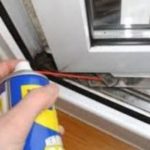
The hinges that are stiff can be repaired with a bit of oil or an ratchet tool that loosens the cover of the operator. DIYers can also repair cracks in glass.
Cracked or Broken Glass
If a window has cracked or broken glass, it's important to take care of the issue as soon as possible. If you don't address the crack, it can get worse and cause airflow issues in your house. If you're not comfortable doing the repair by yourself, a professional can assist.
There are several ways to fix your window, based on its severity. The simplest option is to cover the crack with clear tape. This will safeguard your family from being cut by glass shards, while still allowing air and sunlight to pass through. You can go a step further by using epoxy. This is a more labor-intensive option however it can also provide more appealing results.
First, you'll need to clean the crack. Mix a little soap with water and dip a cotton rag in it. Then, carefully scrub the crack to remove dirt or other debris. After the window is dry then apply the epoxy as per the instructions on the packaging. Once the epoxy has hardened, you can employ a putty knife to scrape away any excess and smooth the surface. it.
The most frequent type is the stress crack. They usually begin at the edges of your window glass and extend throughout the pane. They are often a result of temperature fluctuations in your home and tend to get worse over time.
If a pane of a double-pane window breaks it is necessary to replace the entire unit. This is because double-pane windows are a sealed unit comprising two glass pieces that function as one. This is not like regular windows which can be replaced by an entirely new frame.
To replace the glass pane of double-paned windows you'll need to remove the glazing points or clips that hold the window in place. If you're replacing a broken pane, be sure to keep track of these pieces to be able to replace them in the future. You'll have to scrape the old putty away and then reapply the new pane for windows of different types.
Stained Glass
The delicate little pieces of glass that compose stained glass windows are hard and fragile. A rough treatment, a collision with hard objects or a sudden change in temperature can crack and break the glass.
Even if a bit of glass has been broken It can be repaired and save the cost of removing and replacing the panel. Stained glass experts can use different techniques to repair the damage including re-leading, re-foiling or re-foil painting or platina and then adding new glass.
Replacing or repairing cracked stained glass can be a challenge and time-consuming. It is crucial to work with an expert who is familiar with the various repair techniques and can choose the one that works best for your specific project. The reversibility, strength and visual effect of each repair technique will differ, and each one must be assessed on a case by case basis.
Re-leading is one of the most commonly used ways to repair cracked glass. A skilled artisan will carefully bend the soft ductile led, also known as came back into a shape to accommodate the crack. After the piece is bent it can be placed in place and then cement is used to hold it in place. After the cement has dried, the crack can then be polished, cleaned and sealed.
Another way to repair cracks in leaded glass is to find cracks, and then re-lead the piece of glass. This is a labor-intensive and costly process, but it can be effective. The cracked glass is first removed from the surface, cleaned, and then sanded to smooth the surface. Then a lead knife or pincers are used to cut off the old lead and clean away any oxidation or mold growth. After the lead has been removed, the glass surface that was sanded is cleaned and the new lead is welded into the place.
Reinforcing bars can be added to the window to repair stained glass that has sagged. This is a less expensive solution. They are rebar-like support structures that run along the interior side of lead and join to the frame to stop it from sagging. The bars are often hidden behind foils with decorative designs, making them invisible.
Muntins or Mullions
People who are familiar with windows may be familiar with the term "muntin." These vertical wood strips are used to separate panes of windows in traditional multi-pane windows. They are commonly used to create a more authentic look in historic homes and are sometimes required in city ordinances for renovations or construction in historic districts. Many modern replacement windows only use muntins to enhance the appearance of the window rather than for strength and stability. Muntins are still susceptible to damage and may need to be replaced if damaged or rotten.
A lot of window companies today don't distinguish between mullions and muntins because they all serve the exact same purpose. They are frequently used interchangeably but when you're replacing windows, it's essential to be aware of the distinction between them to ensure that you and your contractor are on the same page when discussing the details of your project.
A mullion is a vertical support that holds multiple panes of tempered glass. This was an essential feature prior to the invention of glass manufacturing technology since larger pieces were almost impossible to produce. The frames of modern windows are constructed from two glass units that are glued together. However, certain older kinds of windows do have mullions to provide support, and they are often used to enhance the appearance of windows.
If your mullions show signs of age you can easily fix them by applying a small bead of silicone to both sides of the muntin and then pressing it back into the frame. If you are replacing a horizontal piece it is possible to use a copingsaw in order to remove the old muntin and then form the top of the new one using a file. Otherwise, simply purchase another muntin that is slightly different from the original one and it will blend perfectly.
Certain IGUs contain both muntins (real mullions) and muntins (replicas) that are built in the unit solely for effect. If you are experiencing problems with these components, it's time to replace the window.
Frame
You don't want ruining the look of your frame by painting it however if you need to touch it up using a sanding brush, you can use a sponge on a fine grit to get rid of any stains and paint. Use dry rags to clean it again. Pay special attention to the corners around the mitered joints. Use wood glue to re-glue the joints if they have opened up. You can also make use of vinegar to dissolve glue in these areas, however you may need to test it on one or two corners before putting it all over.
If window repairs near me aren't tight enough and pose a problem you may be able to disassemble the frame in order to examine them, and follow the steps 3 through 8 to fix it. However, if the gap is only on one side, you may be able to wiggle the joint a bit without removing it.
If the corners are utterly broken, you will need a small clamp, wood glue and needle-nosed pliers. If only the top and bottom corners have split You can usually hammer finishing nails (those are nails that are thin and are very similar in size to the head) into the corner of the frame to ensure that it stays in place after the glue is dry. Be careful not to put the nails too close to the corner, as you could weaken the frame. You can also strengthen the corner using carpenter's glue and the hammer, or wood putty.